Crypto signals: what they are and how to read them
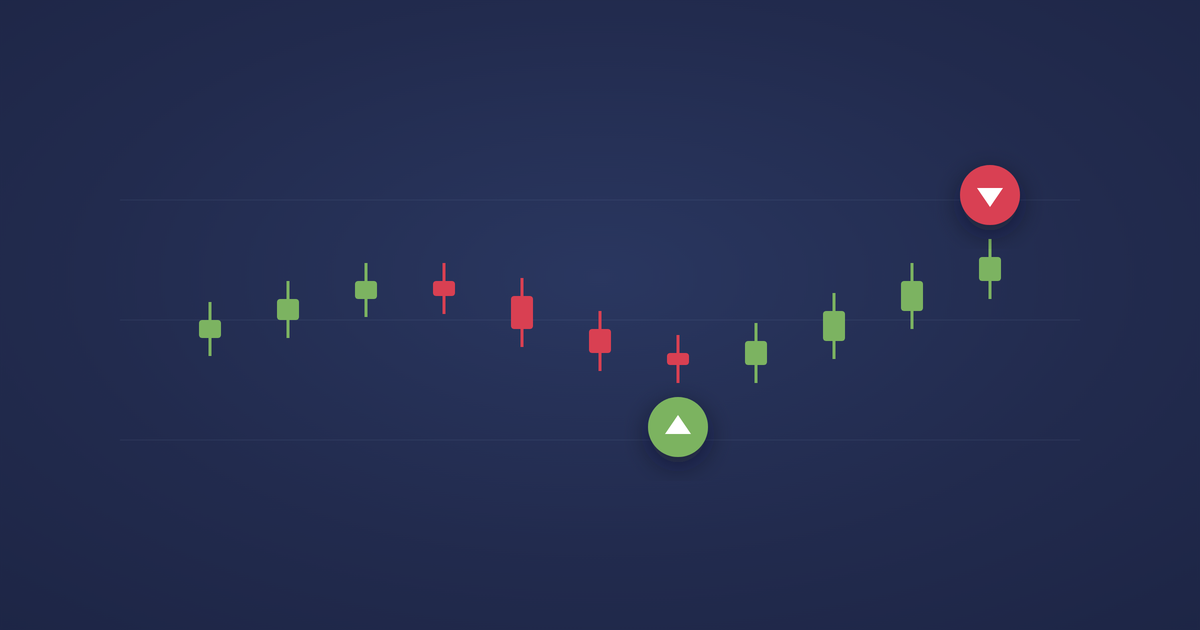
If you've opened a crypto app or a Telegram channel, you've seen the word "signal". Usually next to a green arrow, an exclamation mark and the unspoken promise that you just have to follow it to make money. Reality is a bit different, and much more useful to understand.
A signal, in plain words, is a direction call: it says whether a coin's price is more likely to go up (UP) or down (DOWN) over a certain period. It's not an order, it's not a guarantee. It's an indication, and like any indication it has to be read the right way.
UP and DOWN: what they actually mean
UP doesn't mean "buy now and you'll get rich". It means: based on the data, right now this coin is more likely to rise than to fall over the next few days. DOWN is the opposite. That's all.
The difference with the Telegram channel's green arrow is that a serious signal comes from a calculation, not from a hunch or from someone's interest in getting you to buy. And above all, it can be checked afterwards to see if it was right.
Confidence: how "sure" the signal is
Not all signals are equal. Some come from a very clear situation, others from a murkier one. That's why each signal carries a confidence level: it's the model's way of telling you "I'd bet on this one" or "this one is more of a stretch".
A good system doesn't publish everything it computes. It publishes only the signals that clear a certain confidence threshold, and keeps the too-uncertain ones to itself. Less noise, more substance.
The part almost nobody shows you: verification
Here's the question you should ask in front of any signal: how did it turn out last time? If whoever gives it to you can't answer, or changes the subject, that's a problem.
At High Tide, after seven days we go and check every signal against real Binance data and mark whether it was right or wrong. That way each coin's accuracy is a public, verifiable number, not a promise. It's the only honest way to treat signals.
How to use it without getting hurt
A signal is one ingredient in your decision, not the decision. Look at the broader market context too, don't bet everything on a single move, and don't chase every green arrow you see.
Used this way, a signal takes a bit of the emotion out and gives you a reasoned starting point. Used as an order to execute with your eyes closed, it's just a faster way to lose money.
High Tide's analyses are statistical, not financial advice. Crypto is risky: only invest what you can afford to lose.