Can AI really predict cryptocurrency prices?
Every few weeks a headline shows up: "AI predicts Bitcoin at 1 million dollars." You open it, and inside is someone who asked ChatGPT where the price is going, and ChatGPT threw out a number. That's it.
Let's be clear right away, so you don't waste your time: no, no artificial intelligence can tell you what Bitcoin's price will be tomorrow. Anyone who promises that either doesn't understand how it works, or is selling you something. But here's where it gets interesting, because that doesn't mean AI is useless for crypto. It means it does something different from what you think. And that thing, done well, is genuinely useful.
Let's explain it in normal words.
The difference between "guessing" and "calculating a probability"
When you ask ChatGPT "where is Bitcoin going?", it answers by building a sentence that sounds plausible. It isn't looking at the live market. It has no fresh data. It's lining up words that statistically fit together. It's brilliant at sounding confident, but it's a chat, not an analysis.
A model built specifically for markets works differently. It doesn't try to guess the exact price, it tries to answer a much smaller and much more honest question: looking at how this coin is behaving right now, is it more likely to go up or down over the next few days?
That's a huge difference. One is a barroom prediction ("Bitcoin to a million!"), the other is a reasoned bet on a probability, like when a weather forecaster says "70% chance of rain tomorrow". The forecaster isn't swearing it will rain, they're telling you how likely it is, based on thousands of similar situations seen in the past. Same thing here.
What a model actually looks at (no jargon)
A coin leaves traces. The price goes up and down, but it does so following certain patterns that repeat: how fast it moved, how long it's been rising, whether trading is picking up or cooling off, whether the price is stretched too high and at risk of snapping back down.
These are the same signals an experienced trader watches. The difference is that a person can keep an eye on two or three at a time, on a handful of coins. A model watches all of them, on thirty cryptocurrencies, every single day, without getting tired and without getting carried away by emotion. It doesn't fall in love with a coin, it doesn't panic when one crashes, it doesn't chase the hype when everyone is shouting "to the moon". It just calculates.
This is where AI beats a human: not because it's smarter, but because it's tireless and it isn't afraid.
But watch out: the market isn't a clock
Now the part others don't tell you, and that we make a point of telling you.
Cryptocurrencies are among the most unpredictable things out there. One tweet, one piece of news, one decision by a central bank on the other side of the world, and in ten minutes everything flips. No model, however good, can see a piece of news coming that doesn't exist yet.
That's why the right way to use a tool like this isn't "it tells me what to do and I execute with my eyes closed". It's "it gives me one more piece of information, reasoned and free of emotion, to put together with my own head". A help, not an oracle. Anyone selling you the oracle is lying.
How we do it at High Tide
Here's the thing that sets us apart, and that matters most to us: we do the math in public.
Every day our model publishes an UP or DOWN call on around thirty cryptocurrencies. Nothing special so far, plenty of people do that. The difference is what happens next: after seven days we go and check what actually happened, against real Binance data, and we mark whether the call was right or wrong. Including when it was wrong. Especially when it was wrong.
Because it's easy to show only the times you get it right, anyone can do that. The hard, honest thing is to also show the times you miss, and let the number speak. On the site you'll find the real accuracy for every coin, kept up to date, no tricks. Not a brochure number, the real one.
We don't do this to be likeable. We do it because in a field full of inflated promises, the only thing worth anything is being able to prove what you say. If one day our numbers get worse, you'll watch them get worse. That's the deal.
So, do you need it or not?
It depends what you expect.
If you're looking for someone to tell you "buy here, sell there, get rich", that's not us, and we'd advise you to stay well away from anyone who promises it. That stuff always ends the same way.
If instead you want one more tool, a cold daily look at thirty coins that tells you which way the odds lean and honestly shows you how often it's right, then yes, it can help you decide with your head instead of your gut. And in crypto, deciding with your gut is the fastest way to get hurt.
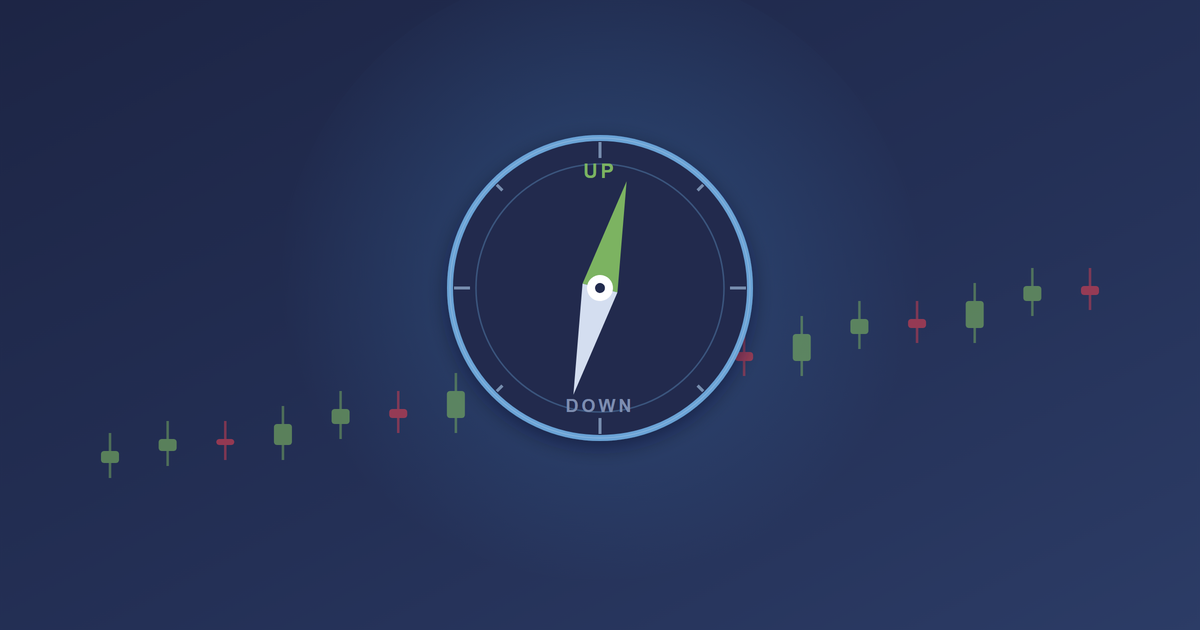
Artificial intelligence isn't a crystal ball, it's a compass. It doesn't tell you where the treasure is, but it helps you not head in the wrong direction when everything around you is open sea. And in the middle of the noise, an honest compass is already worth quite a lot.
High Tide's analyses are statistical, not financial advice. Crypto is risky: only invest what you can afford to lose.